The useful starting point
Start with the product and operating requirement. A refrigeration plant is one part of a larger production, storage and safety system.
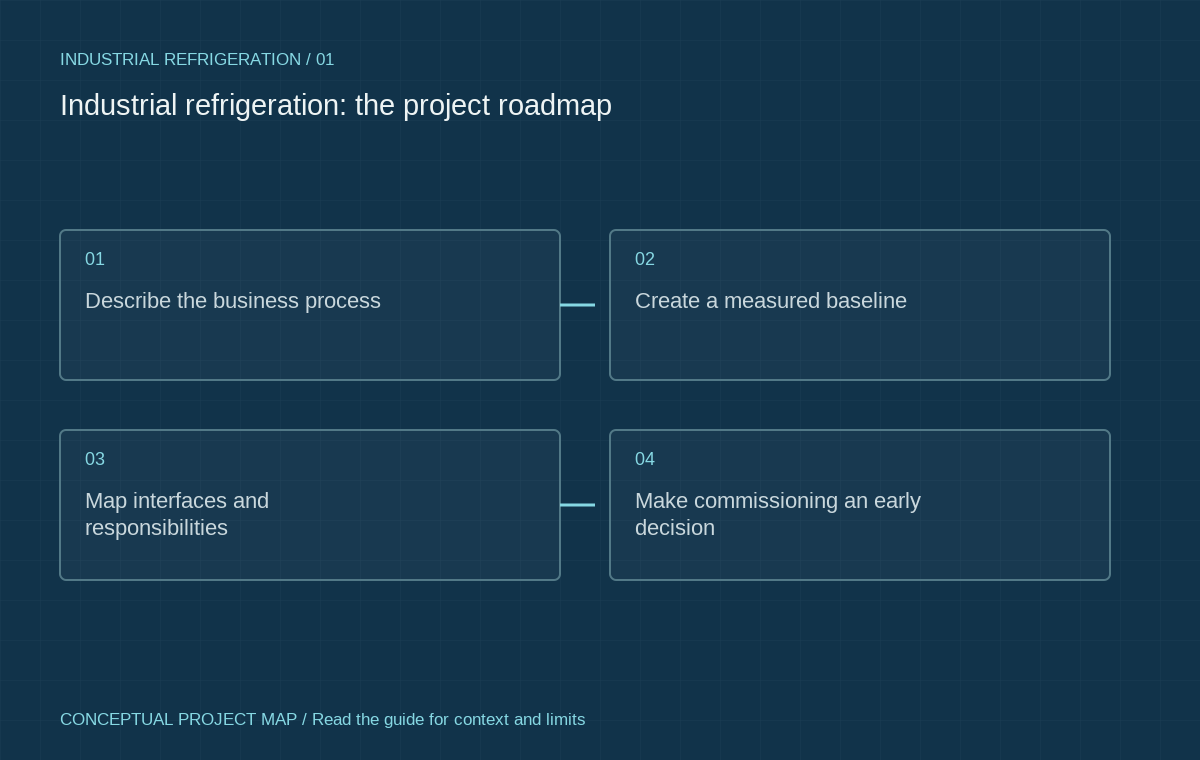
Describe the business process
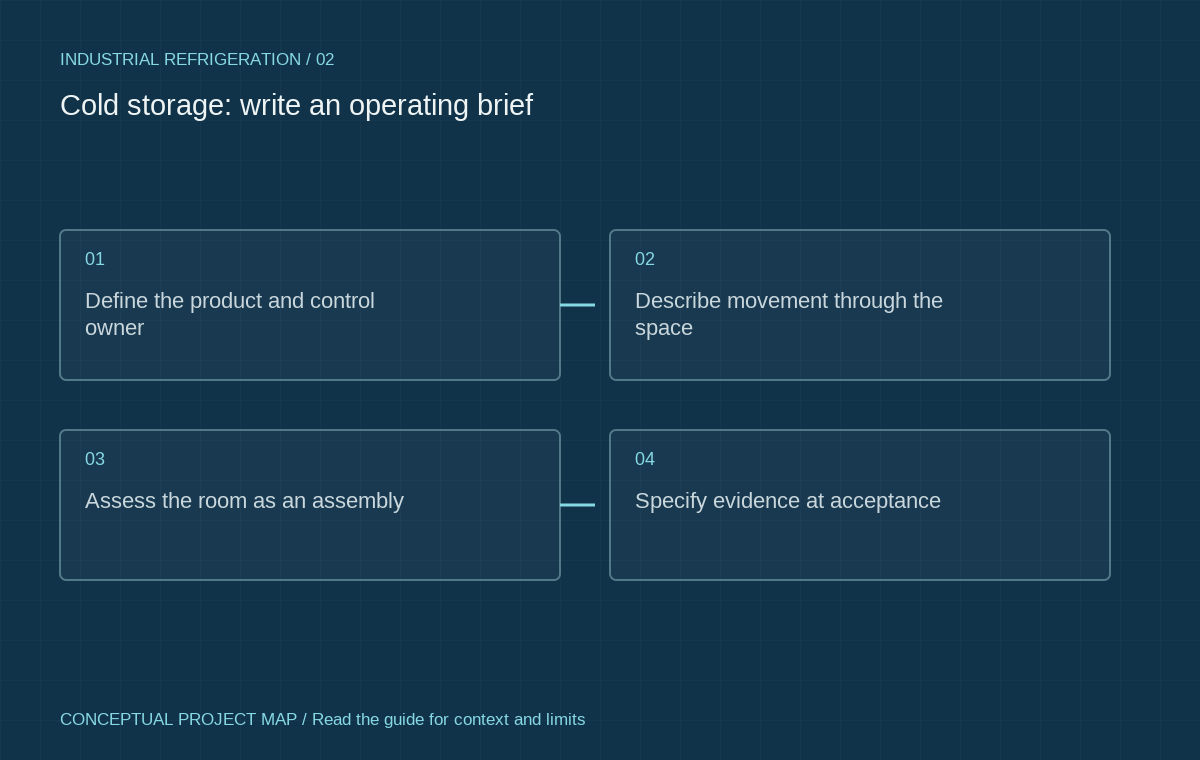
Write what the facility stores or produces, how material arrives, how long it remains and how it leaves. Identify the rooms and processes that need cooling, the relevant product requirements and who is responsible for them. A room temperature preference does not by itself define a product temperature or food-safety control.
Separate a replacement from an expansion or a changed process. Keep today’s operation and the proposed future case on different schedules, with assumptions labelled. Ask the design team which product, throughput and operating information they need before equipment can be selected.
Create a measured baseline
Collect available equipment schedules, maintenance reports, alarm history and energy bills. Record the limitations: a monthly whole-building bill may not isolate refrigeration, and a room sensor may not represent every product location. Existing records should be preserved even when further measurement is needed.
Give the professional actual operating hours, delivery windows, door usage and known seasonal conditions. Do not substitute a generic cooling allowance for a project load assessment.
Map interfaces and responsibilities
Identify the owner, refrigeration designer, contractor, electrician, controls integrator, building team and relevant authority. Ask who resolves heat rejection, drainage, structural support, electrical supply, refrigerant safety and inspection dependencies. A supplier’s package should state which interfaces it excludes.
In Alberta, confirm the pressure-equipment and plant requirements with ABSA for the actual proposal. Other provinces have their own authorities. This planning guide does not establish an exemption or approval.
Make commissioning an early decision
Agree what will demonstrate the required operation, who witnesses it and what records the owner receives. Include controls, alarms, operator familiarisation and outstanding-item closure. Define a planned outage and contingency process before equipment is disconnected.
Use the project brief tool to prepare an enquiry. It records owner inputs for professional assessment; it does not produce an equipment selection or technical design.
References / Jurisdiction matters
Sources & further reading
Confirm the actual location, permit authority and equipment instructions before relying on a requirement. A source from another jurisdiction is identified for context.
- Refrigeration plants and pressure equipmentABSA — Alberta pressure equipment safety authority · 2026-10-13
- Preventive controls for food businessesCanadian Food Inspection Agency · 2026-10-13
- Occupational health and safetyGovernment of Alberta · 2026-10-13
Do not open equipment, handle refrigerants or work on energized systems. Permits, qualified trades and inspection requirements vary by location. This guide does not design an installation or certify existing equipment.