The useful starting point
Room geometry, product movement, loading patterns and envelope condition belong in the same brief as the requested operating conditions.
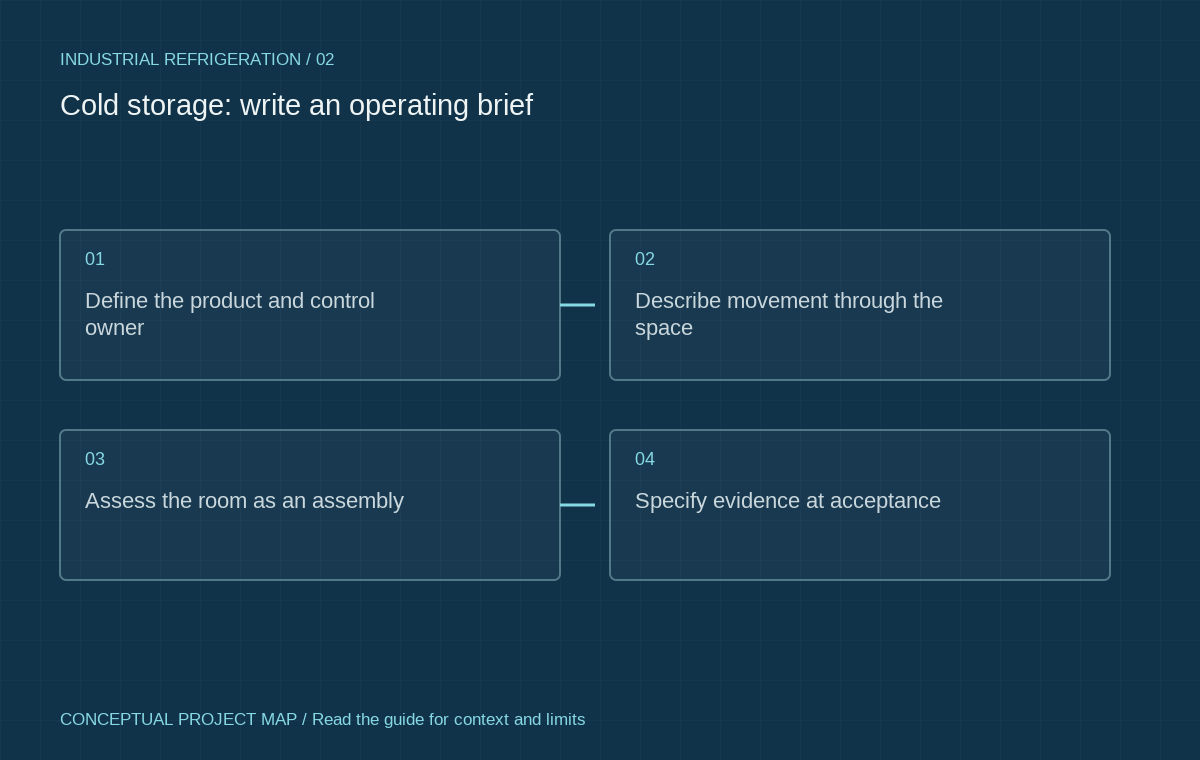
Define the product and control owner
Name the products, packaging, storage duration and relevant process requirements. Have the food-safety or process owner establish the appropriate limits, monitoring and response procedures. A refrigeration contractor should not have to infer these from a room’s nickname.
Separate normal storage, product pull-down and any freezing process. They are different operating cases. Keep product specifications and any applicable preventive-control records with the brief.
Describe movement through the space
Record delivery sizes, loading hours, door cycles and the route between ambient and controlled spaces. Include staging areas, traffic conflicts and future throughput changes. Ask the designer how these conditions affect the load assessment and room arrangement.
Document racking and intended airflow paths. Storage layout changes can affect distribution and monitoring even if the room setpoint remains unchanged. Confirm access needed for cleaning and equipment service.
Assess the room as an assembly
Provide available drawings and describe visible damage, moisture, ice or recurring door problems. The envelope, penetrations, drainage and floor conditions require coordinated assessment. Record observations; do not diagnose hidden construction from an online checklist.
Ask who repairs building defects and which work must happen before the refrigeration installation. A new unit does not settle an unresolved enclosure or operating problem.
Specify evidence at acceptance
Agree how the room will be checked under representative conditions, where monitoring occurs and how exceptions are resolved. Preserve calibration and commissioning records with the operational procedures. Do not treat an empty-room reading as proof of every future loading case.
The CFIA preventive-controls material is a useful starting point for regulated food businesses; the operator remains responsible for the requirements that apply to its own activities.
References / Jurisdiction matters
Sources & further reading
Confirm the actual location, permit authority and equipment instructions before relying on a requirement. A source from another jurisdiction is identified for context.
- Preventive controls for food businessesCanadian Food Inspection Agency · 2026-10-13
- Energy efficiency for industryNatural Resources Canada · 2026-10-13
Do not open equipment, handle refrigerants or work on energized systems. Permits, qualified trades and inspection requirements vary by location. This guide does not design an installation or certify existing equipment.