The useful starting point
A planned interruption needs product protection, responsible decision-makers, readiness gates and a controlled return to operation.
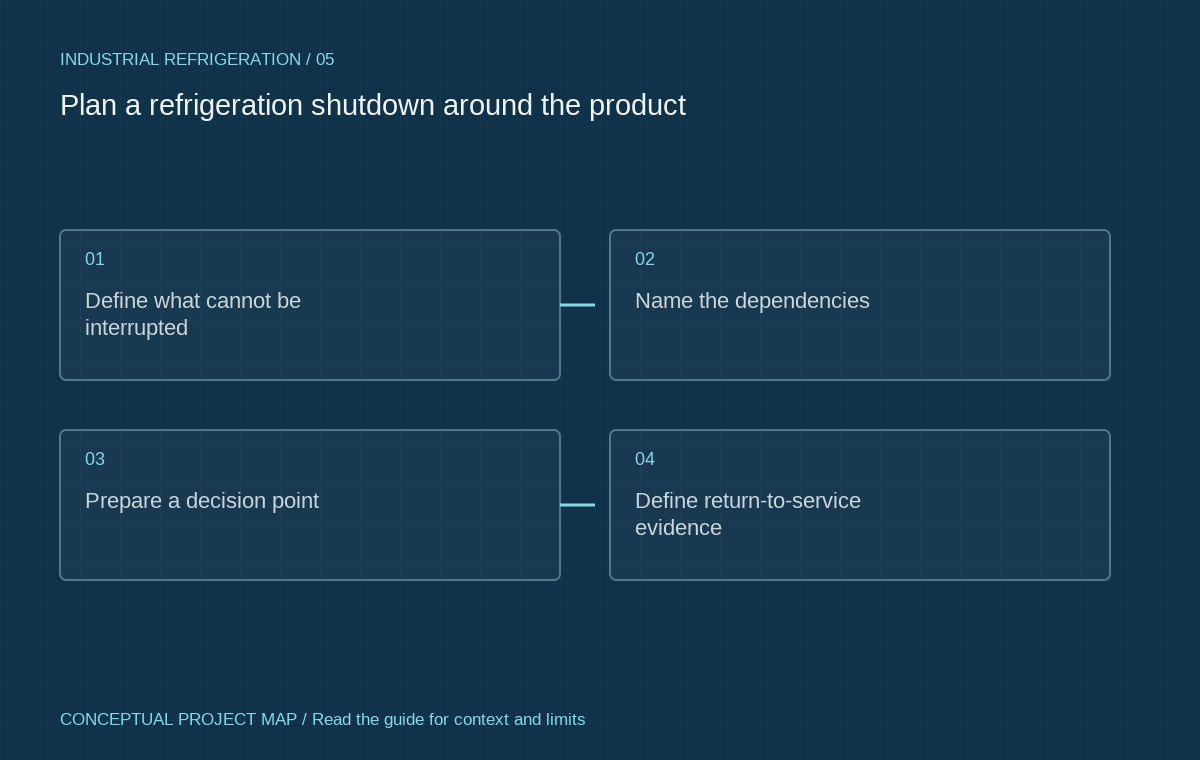
Define what cannot be interrupted
List affected products, processes, rooms and downstream operations. The process or food-safety owner must define the acceptable conditions and response decisions. Avoid assuming that room insulation creates a safe interruption period.
Identify monitoring that must continue, temporary storage or production changes under consideration, and who approves the plan. Temporary equipment needs its own professional assessment and operating arrangements.
Name the dependencies
Coordinate refrigeration, electrical, controls and building work on one schedule. Record equipment availability, required approvals, access and specialist attendance as readiness items. A date on a contractor calendar is not proof that the facility is ready.
Ask the qualified team to define isolation and safe-work responsibilities. Do not use an owner planning brief as a technical isolation sequence.
Prepare a decision point
Before the shutdown, confirm whether each readiness item is complete and who has authority to proceed or defer. Preserve the contingency plan and escalation contacts. Include the possibility that a concealed condition or failed component changes the proposed work.
Communicate expected operational effects to the people responsible for production and product decisions. Keep changes in one current version of the plan.
Define return-to-service evidence
Have the professional team agree the commissioning, operating and product-release checks that apply. A running compressor or cleared alarm alone does not establish that all affected operations may resume.
Record completed checks, unresolved items and who accepted the handover. Review actual disruption and findings afterward so the next planned shutdown uses better evidence.
References / Jurisdiction matters
Sources & further reading
Confirm the actual location, permit authority and equipment instructions before relying on a requirement. A source from another jurisdiction is identified for context.
- Preventive controls for food businessesCanadian Food Inspection Agency · 2026-10-13
- Occupational health and safetyGovernment of Alberta · 2026-10-13
- Refrigeration plants and pressure equipmentABSA — Alberta pressure equipment safety authority · 2026-10-13
Do not open equipment, handle refrigerants or work on energized systems. Permits, qualified trades and inspection requirements vary by location. This guide does not design an installation or certify existing equipment.