The useful starting point
Monitoring is useful when someone owns the response, the limits have an approved basis and the records can explain what happened.
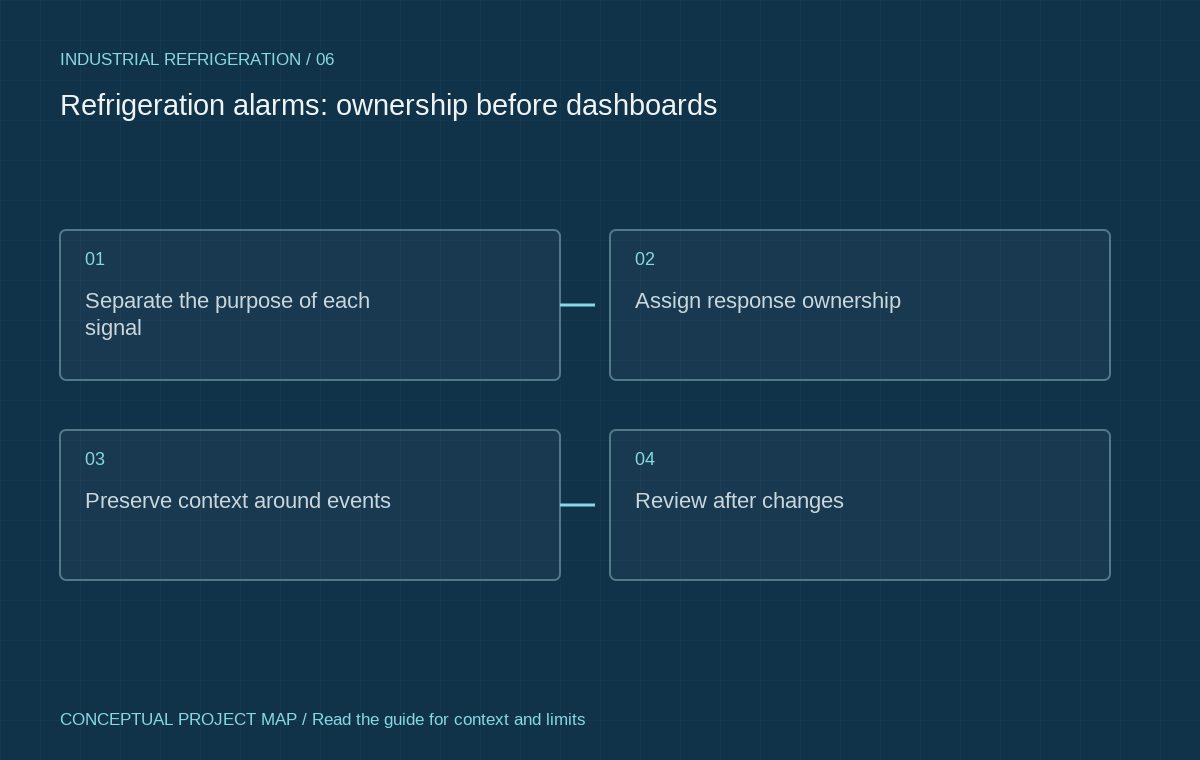
Separate the purpose of each signal
Distinguish process monitoring, product controls, equipment protection and safety systems. They may have different design, testing and response requirements. Ask the responsible professionals to document which signals serve which purpose.
A convenient remote temperature display does not replace an appropriate safety system or establish food-safety compliance. Avoid presenting one sensor or dashboard as complete plant coverage.
Assign response ownership
Record who receives each notification during and outside operating hours, who acknowledges it and who makes the relevant operational decisions. Test the documented notification and escalation arrangement with authorised personnel.
Do not publish access credentials or detailed security-sensitive facility diagrams in an enquiry. A first project discussion needs the operating problem and contact route; private technical records can be shared through an agreed channel later.
Preserve context around events
Keep timestamps, relevant readings, operating conditions and actions with each event. Include known sensor maintenance, communications interruptions and manual changes. A graph without this context can misrepresent what the equipment or product experienced.
Ask the controls team about time synchronisation, retention, access, exports and ownership of the data. Ensure useful records remain available when a vendor contract or staff role changes.
Review after changes
Equipment, room use, products and operating hours can change the assumptions behind an alarm arrangement. Have the responsible team review the system after authorised modifications and record the outcome.
Safety detection, alarm thresholds and emergency procedures require site-specific professional assessment. This guide provides project questions and no threshold settings or emergency operating instructions.
References / Jurisdiction matters
Sources & further reading
Confirm the actual location, permit authority and equipment instructions before relying on a requirement. A source from another jurisdiction is identified for context.
- Preventive controls for food businessesCanadian Food Inspection Agency · 2026-10-13
- Occupational health and safetyGovernment of Alberta · 2026-10-13
- Ammonia chemical profileCanadian Centre for Occupational Health and Safety · 2026-10-13
Do not open equipment, handle refrigerants or work on energized systems. Permits, qualified trades and inspection requirements vary by location. This guide does not design an installation or certify existing equipment.