The useful starting point
A maintenance agreement should make responsibility, records and escalation visible before a failure.
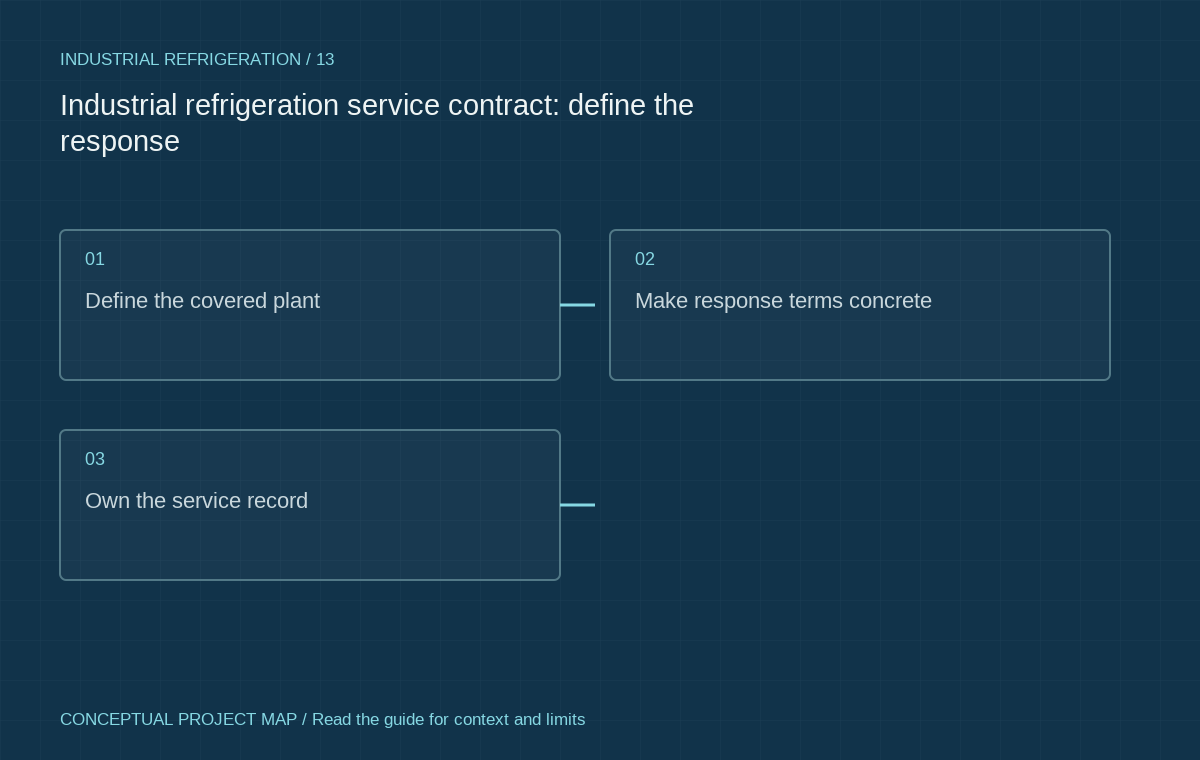
Define the covered plant
Attach the current equipment register and identify what is outside the agreement. Confirm operating hours, site access, required qualifications and the responsible facility contact.
Ask which tasks follow manufacturer instructions and applicable requirements, which are condition-based, and which are quoted separately. Avoid treating a generic visit count as a complete maintenance programme.
Make response terms concrete
Record contact routes, coverage periods, escalation and how urgent findings are communicated. Ask what is promised for attendance, parts and specialist support in writing.
List the information the provider needs before attending, while keeping credentials and sensitive plans in a controlled channel. The public enquiry is not an emergency service request.
Own the service record
Require a finding, action, parts record, unresolved item and next owner for each visit. Save updated drawings or settings after approved changes.
Review recurring alarms and repairs periodically with operating context. A closed work order should not hide an outstanding reliability or safety issue.
References / Jurisdiction matters
Sources & further reading
Confirm the actual location, permit authority and equipment instructions before relying on a requirement. A source from another jurisdiction is identified for context.
- Refrigeration plants and pressure equipmentABSA — Alberta pressure equipment safety authority · 2026-10-13
- Occupational health and safetyGovernment of Alberta · 2026-10-13
Do not open equipment, handle refrigerants or work on energized systems. Permits, qualified trades and inspection requirements vary by location. This guide does not design an installation or certify existing equipment.