The useful starting point
Compare the same operating requirement, name excluded work and make commissioning records part of the purchase decision.
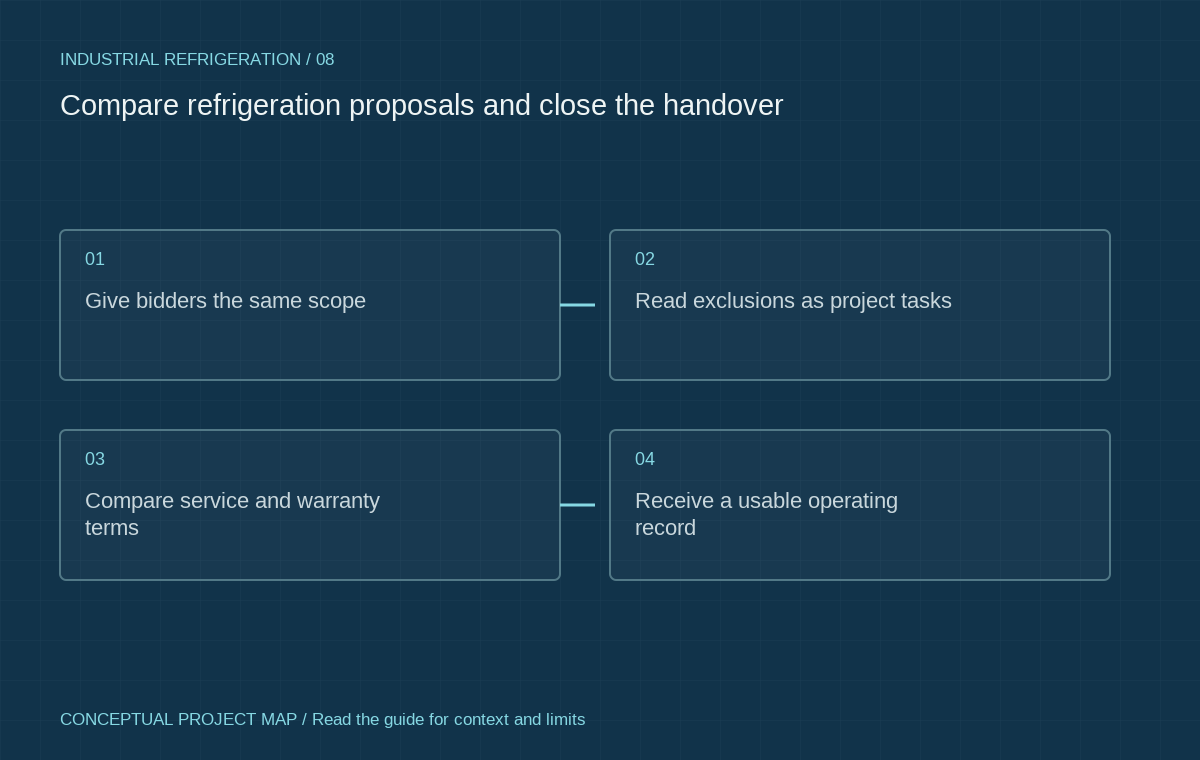
Give bidders the same scope
Provide one version of the operating brief, relevant existing records and known constraints. Ask each provider to state assumptions, proposed equipment and the work included. Label unresolved conditions rather than asking bidders to hide them inside an apparently fixed price.
Separate engineering, equipment supply, installation, controls, electrical interfaces, building work and product-management responsibilities. Identify approvals and inspections without assuming one contractor owns them all.
Read exclusions as project tasks
For every exclusion, identify who will provide the work and how it affects the overall cost or schedule. Access, lifting, temporary cooling, disposal, commissioning and operator familiarisation can be material parts of the project.
Ask how changes are priced and approved. Equipment substitutions should include updated technical documentation and the responsible designer’s review where applicable.
Compare service and warranty terms
Confirm the actual warranty provider, coverage, exclusions and claim process. Ask about maintenance conditions, parts availability and service arrangements in writing. Do not infer around-the-clock response from a general service claim.
Keep provider qualifications and project-specific authority requirements as separate checks. This portal offers reference material and enquiry intake; it does not certify a provider or promise availability.
Receive a usable operating record
The handover should reflect the installed system and applicable approvals, tests, manuals, control arrangements and operator responsibilities. Agree the required list before awarding the project. Store superseded documents separately so the current record is clear.
Close unresolved items with an owner and evidence. Preserve the commissioning baseline and maintenance arrangements for future staff. A paid invoice alone is not a complete technical or operational handover.
References / Jurisdiction matters
Sources & further reading
Confirm the actual location, permit authority and equipment instructions before relying on a requirement. A source from another jurisdiction is identified for context.
- Refrigeration plants and pressure equipmentABSA — Alberta pressure equipment safety authority · 2026-10-13
- Occupational health and safetyGovernment of Alberta · 2026-10-13
- Energy efficiency for industryNatural Resources Canada · 2026-10-13
Do not open equipment, handle refrigerants or work on energized systems. Permits, qualified trades and inspection requirements vary by location. This guide does not design an installation or certify existing equipment.